
How to Choose a Blood Pressure Monitor for Home Use in Kenya


Checking blood pressure at home is something many families and caregivers do, especially for people who have been advised by a doctor to monitor it regularly. With so many models on the market, choosing one can feel confusing. Here is a simple guide to help you pick a blood pressure monitor that suits you.
1. Upper-arm or wrist monitor?
Upper-arm monitors are generally the recommended choice for home use because they tend to give more consistent readings. They are the better pick for most people.
Wrist monitors are compact and easy to carry, but they are more sensitive to wrist and arm position, so readings can vary more if the technique isn’t perfect.
2. Get the right cuff size
A cuff that is too small or too large can give inaccurate readings. Measure around the middle of your upper arm and check the size range printed on the cuff. If your arm is larger or smaller than average, look for a model that offers a bigger or smaller cuff.
3. Features worth looking for
- Memory storage: saves past readings so you can show your doctor the trend.
- Large, clear display: helpful for older users.
- Irregular heartbeat indicator: alerts you if the device detects an uneven rhythm during measurement.
- One-touch operation: simple to use without confusion.
- Multiple user profiles: useful if two people share one device.
- Power options: check whether it runs on batteries, a power adapter, or is rechargeable.
4. Blood pressure monitors available at Farlays
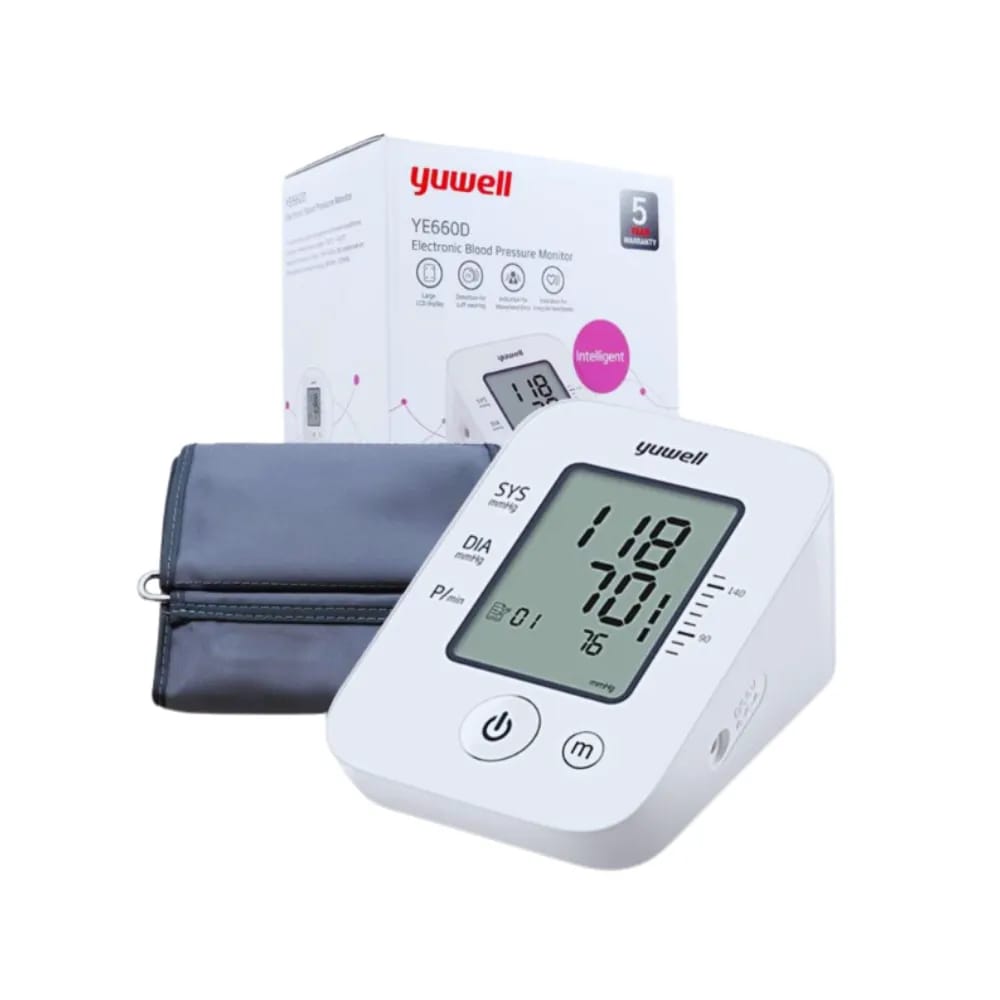
- Yuwell YE660D Blood Pressure Monitor: one of our most popular models. It is an upper-arm monitor with a large, easy-to-read screen, one-touch operation, an adjustable cuff, irregular heartbeat detection, and memory storage. It works on batteries or AC power, so it suits both home and clinic use.
- Omron M1 Blood Pressure Monitor: a basic Omron model for everyday home use.
- Omron M2 Blood Pressure Monitor: another trusted Omron option for home monitoring.
- Rechargeable BP Machine (CK-A120): a rechargeable model, so you don’t depend on buying batteries.
- Electronic Blood Pressure Monitor: a simple, budget-friendly electronic monitor.
Click any product above to see its full details and current price.
5. Tips for accurate readings at home
- Rest quietly for about five minutes before measuring.
- Sit with your back supported, feet flat, and your arm resting at heart level.
- Avoid caffeine, smoking, and exercise for 30 minutes beforehand.
- Take your reading at about the same time each day.
- Don’t talk during the measurement.
6. Caring for your monitor
Store it in its case, avoid kinking the tube, replace batteries when readings look unusual, and wipe the cuff with a damp cloth only.
Need help choosing?
Our team can help you pick a monitor that fits your needs and budget. Order on WhatsApp or browse all blood pressure monitors.
This article is for general information only and is not medical advice. If you have concerns about your blood pressure, please consult a doctor or qualified healthcare professional.